Animal Sentience
welfare campaign
Do animals feel?
For this question we turn to science and investigate the phenomenon of animal sentience.
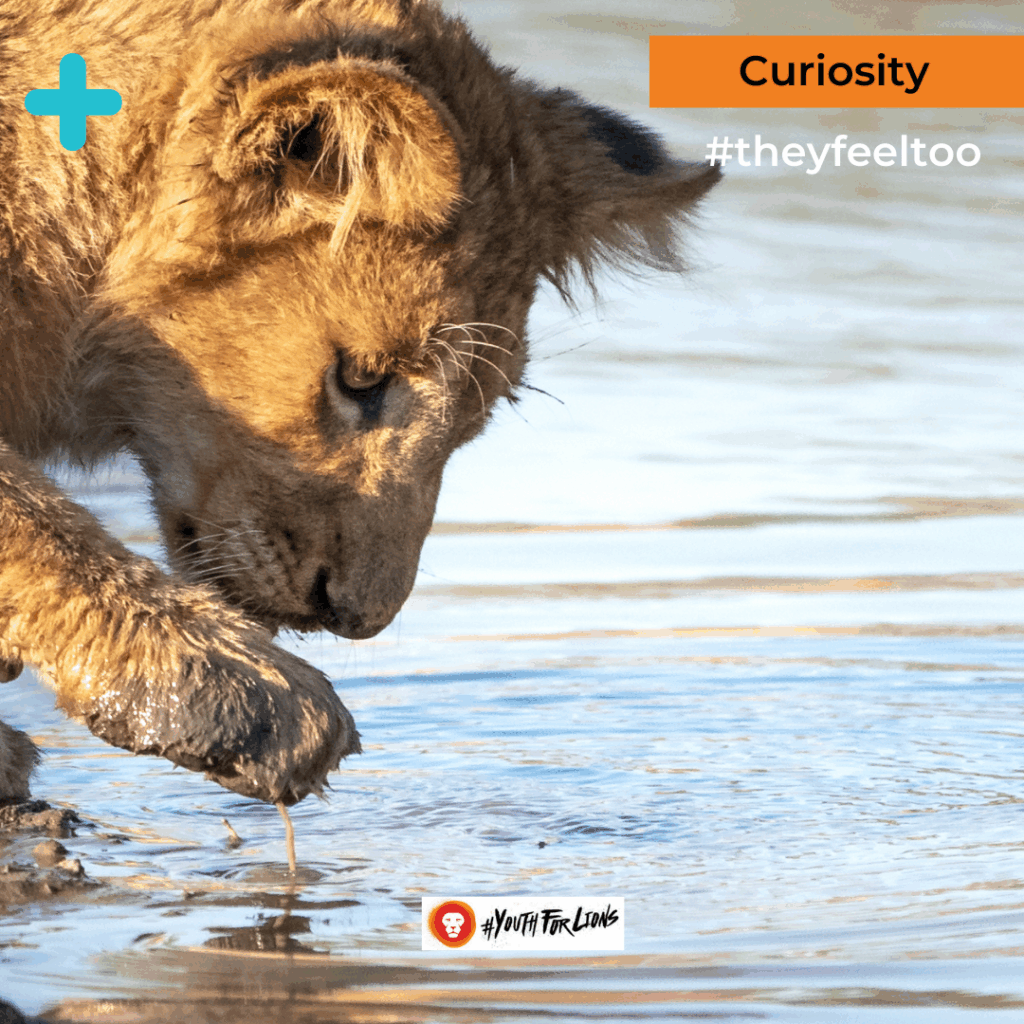
According to animal welfare scientist Mellor, sentience refers to an animal’s capacity to consciously perceive through their senses – essentially to consciously feel or experience their worlds subjectively. This includes experiencing both positive and negative feelings and emotions like pleasure, pain, fear, joy, frustration and comfort.
What does animal sentience mean?
The word ‘sentience’ comes from the Latin word SENTIRE which means ‘to feel’. We can identify that these can be good feelings or bad feelings such as:
– pleasure, warmth, joy, comfort, excitement
– pain, anxiety, distress, boredom, hunger and thirst
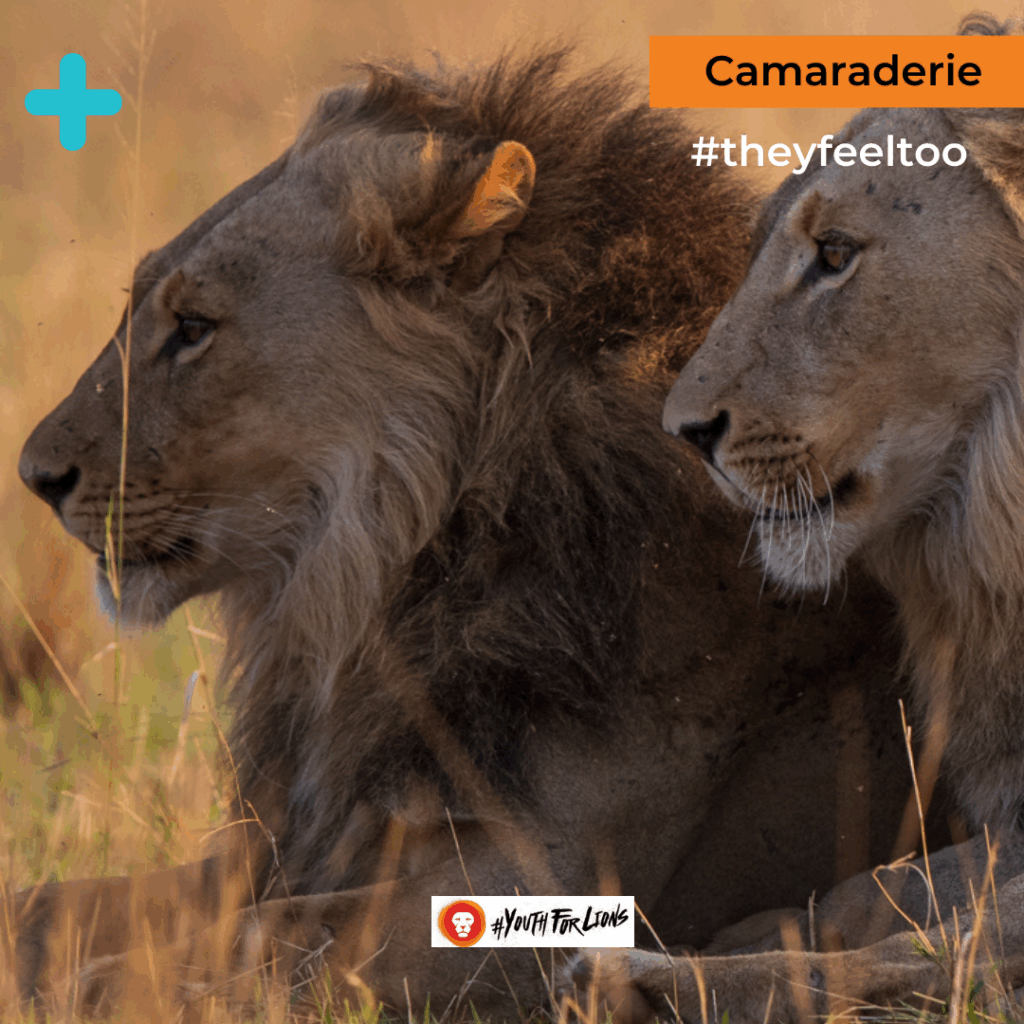
For social species like lions, this includes the ability to form social bonds.
Why is it Important to Recognise Animal Sentience?
Animal sentience is crucial for animal welfare. It highlights the importance of considering the non-human animal’s mental well-being. It is NOT just about an animal’s physical well-being. It is a reminder of the need to move beyond simply ensuring animals no longer suffer and move towards securing an ability for non-human beings to thrive.
They feel pain and suffering!
After a long history of asserting that animals have no cognisance and therefore do not have the capacity to feel pain or suffering, the 18th Century English philosopher, Jeremy Bentham, said:
“the question is not
Can they reason? or
Can they talk? but
“Can they suffer?”
They too experience emotions!
Scientists have proven that animals have neurological substrates complex enough to support conscious experiences, similar to humans.
Therefore animals have the ability to ‘feel and experience emotions, such as joy, pleasure, pain, fear, boredom, hunger, warmth, and excitement” according to Mellor, an animal welfare scientist.
are animals sentient beings?
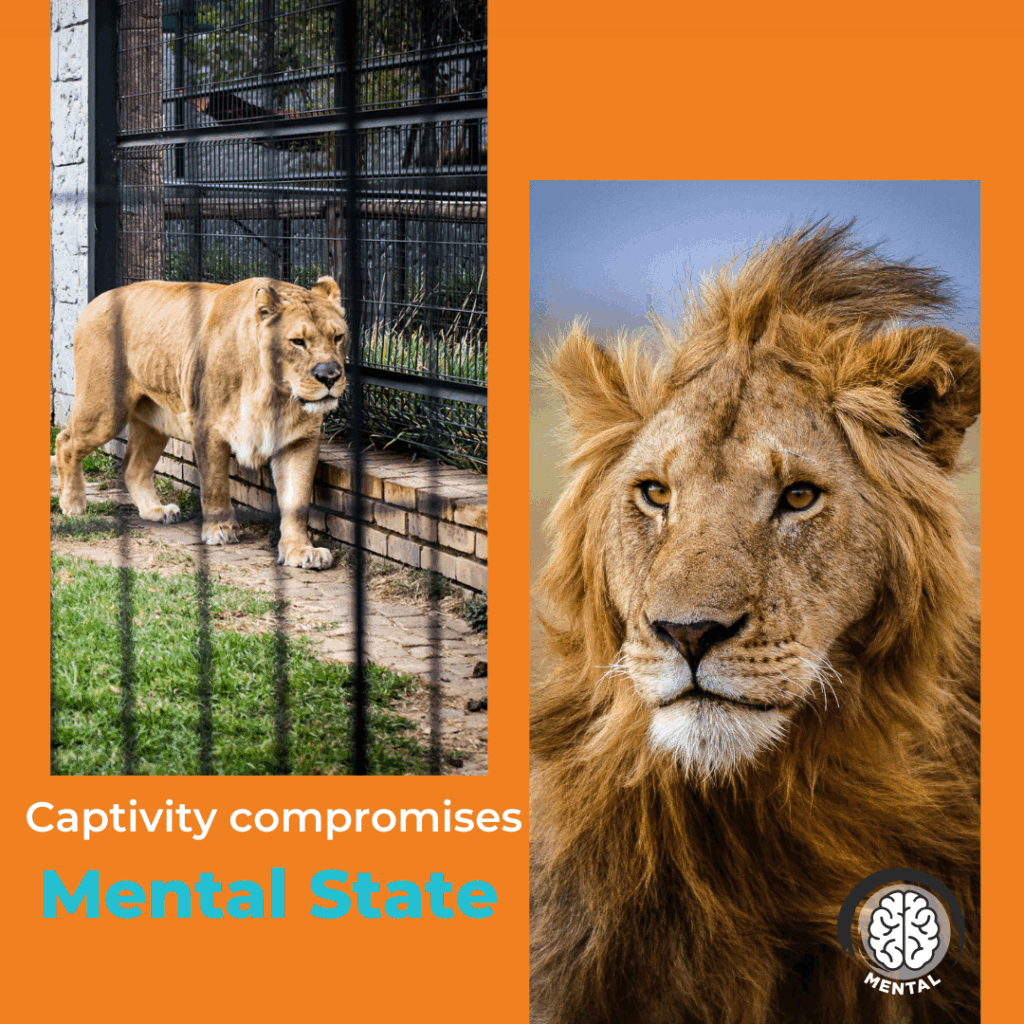
Mellor’s Five Domains Model for animal welfare assessment recognises four functional domains (nutrition, physical environment, health, and behavioural interactions) and a fifth domain of the animal’s mental state. Being kept in captivity compromises many aspects of the Five Domains.
environment
Unacceptable environmental conditions common in captivity include close confinement and crowding, hot and cold extremes (lack of shelter in this example), loud and unpleasant noise and odours, monotony and lack of sleep and adequate rest.
Behaviour
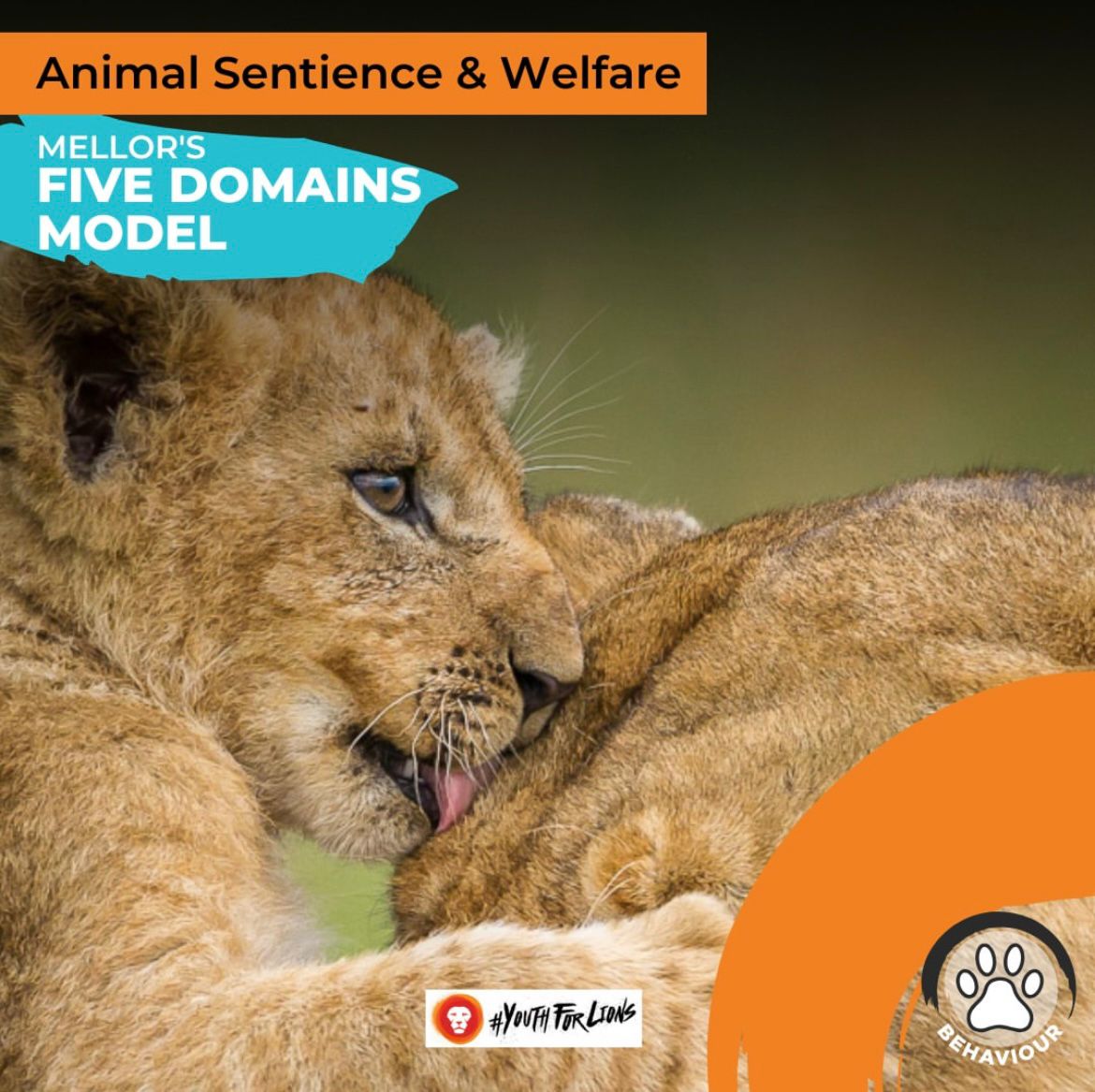
Captivity can be detrimental through inappropriate interactions (or lack thereof) with its environment, other animals and/or humans leading to boredom, depression, helplessness, anger, frustration, loneliness, a desire to play, sexual frustration, anxiety, fear and exhaustion.
Health
Global scientific consensus exists that animal sentience underpins animal welfare.
Health is one of Mellor’s Five Domains to assess animal welfare. Captivity can harm the health of lions through an increased risk of disease, injury and functional impairment.
Nutrition
Lions in the wild have full agency and freedom to hunt and choose when, what, how and how much food they hunt and consume. In captivity, predators can’t hunt and are often fed insufficient variety and quality of meat, and too much or too little food.
Mental wellbeing
An animal’s Mental state is one of Mellor’s Five Domains to assess animal welfare. Captivity can be detrimental to the mental state of lions and other predators through various undesirable conditions that cause feelings of
– thirst
– hunger
– anxiety
– fear
– pain
– distress
South african legislation
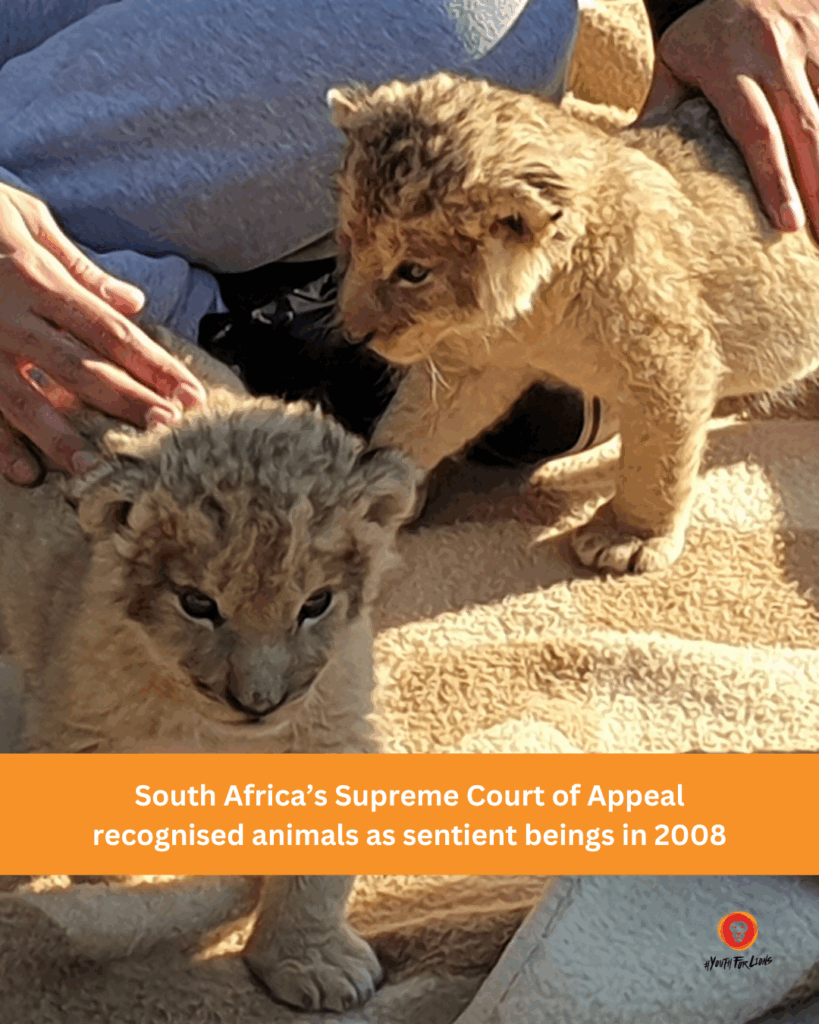
In 2008, the Supreme Court of Appeal recognised that animals are capable of suffering and feeling pain. In 2016, a Constitutional Court made the groundbreaking statement that “the rationale behind protecting animal welfare has shifted from merely safeguarding the moral status of humans to placing intrinsic value on animals as individuals”.
This means that:
Our courts place value on animals simply by virtue of being alive, regardless of their usefulness or benefit to humans. A Constitutional Court decision is binding and cannot be changed by any other court. This suggests that humans have a moral obligation to protect an animal’s well-being and allow it to live free of harm. This was confirmed in the lion bone judgement in 2019 by the High Court.